
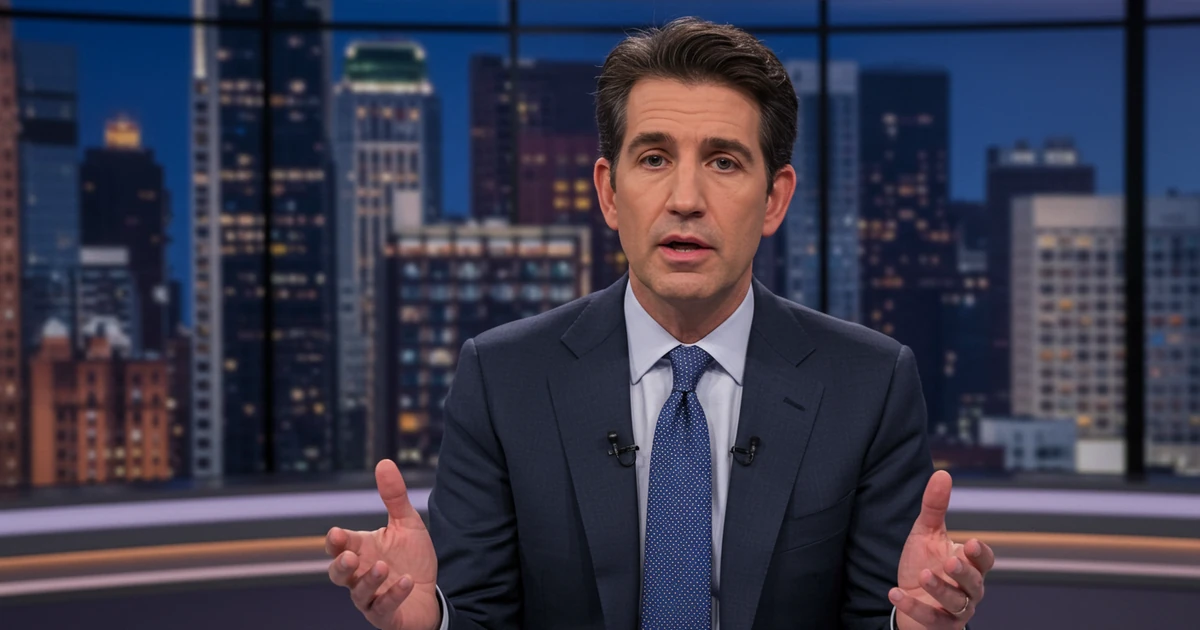
Renowned financial journalist Andrew Ross Sorkin has issued a stark warning to investors, drawing alarming parallels between the current AI-driven market and the speculative frenzy that preceded the 1929 Wall Street crash. His analysis, rooted in research for his new book, suggests a significant market correction is not a matter of if, but when.
→ SAVE Plan Scrapped: What It Means For Your Student Loans
“We will have a crash; I just can’t tell you when, and I can’t tell you how deep. But I can assure you, unfortunately, I wish I wasn’t saying this, we will have a crash.”
→ Oil Prices: Navigating 2026’s Volatile Currents
The core of the anxiety, according to Sorkin, stems from the market’s current trajectory. He points to an economy being “propped up, almost artificially, by the artificial intelligence boom.” This has created a precarious situation that our team has been tracking closely. The central question Andrew Ross Sorkin poses is whether this is a sustainable “gold rush” or a temporary “sugar rush” that is doomed to fade.
The 1929 vs. 2020s Market: A Comparison
Our analysis, informed by Sorkin’s commentary, reveals historical echoes that are difficult to ignore. While not a direct one-to-one replication, the patterns of speculation and leverage are notable. The work of Andrew Ross Sorkin provides a framework for understanding these risks.
| Feature | The Roaring 1920s | The AI-Boom 2020s |
|---|---|---|
| Driving Technology | Radio, Automobiles, Electrification | Artificial Intelligence, Private Credit |
| Market Sentiment | Unprecedented public euphoria and participation | FOMO, massive investment in tech stocks |
| Core Risk | High leverage, buying stocks on margin | “Shadow banking,” private credit leverage |
| Regulatory Stance | Loose regulations, pre-SEC era | Removal of post-2008 guardrails |
Andrew Ross Sorkin on AI: Gold Rush or Sugar Rush?
The debate over the long-term viability of the AI boom is at the center of the market’s current uncertainty. The insights from Andrew Ross Sorkin highlight a critical concern: circular investments. He has pointed to deals where a major tech company invests billions in an AI startup, which then uses that same cash to buy chips from the investor, creating a self-contained loop that may inflate valuations.
This modern financial engineering happens against a backdrop where, as Andrew Ross Sorkin notes, many of the guardrails put in place after previous crashes are being weakened or removed. This creates a potentially fragile system. As a leading voice in financial journalism, his commentary on CNBC’s Squawk Box and in his DealBook column continues to shape the conversation.
The veteran journalist, whose book Too Big to Fail became the definitive account of the 2008 crisis, is now applying that same lens to today. The extensive research for his new book, “1929: Inside the Greatest Crash in Wall Street History,” gives his warnings a heavy dose of historical authority. This perspective from Andrew Ross Sorkin is forcing Wall Street to look in the mirror.
As he detailed in a recent interview with CBS News, the anxiety is not about a collapse tomorrow, but about the unsustainable level of speculation and debt building up in the system. The final analysis from Andrew Ross Sorkin is a cautionary tale for a market captivated by the promise of AI.
Key Takeaways
- Impending Crash: Andrew Ross Sorkin explicitly states his belief that a market crash is inevitable due to current speculative conditions resembling the 1920s.
- AI Bubble: The primary driver of this risk is the AI boom, which Sorkin questions as either a “gold rush or a sugar rush” propping up the economy.
- Leverage & Regulation: A key concern is the immense, often untraceable, leverage in the private credit market combined with the rollback of financial regulations.
Relevant posts
- The Iranian Threat: Will US Bases Be Next | Strait Of Hormuz
- are banks closed on juneteenth holiday: Comprehensive Analysis and Insights | Juneteenth
- A Nation’s Markets React to Juneteenth Celebrations | Juneteenth
Visit themarketmail.com for more stories.